Why Italian-Made Engineered Hardwood Outperforms Domestic Brands in Vail Valley Mountain Homes
Vail Valley sits high in the Rockies, where thin mountain air and long dry winters test everything inside a home, including the floor underfoot. Wood flooring that performs beautifully at sea level can warp, cup, or gap in these conditions. That’s why so many Colorado homeowners take a closer look at how their flooring is built before they buy. Italian-made engineered hardwood keeps coming out ahead of many domestic brands, and the reasons come down to construction, craftsmanship, and how real wood behaves in Colorado’s unique climate.
The Mountain-Home Problem Every Vail Valley Homeowner Faces With Wood Floors
Every homeowner who installs a hardwood floor in the mountains runs into the same challenge: wood is a living material that responds to its environment. As humidity levels rise and fall through the seasons, wood expands and contracts. In a stable, humid climate, those movements stay small. In Vail Valley, where humidity swings hard between seasons, that movement becomes the deciding factor in whether a floor stays flat and tight or develops problems.
Understanding this behavior helps explain why some flooring options thrive here while others struggle.
Why High Altitude and Dry Air Are Hard on a Hardwood Floor
Colorado’s dry climate pulls moisture out of everything, and wood is no exception. At high altitude, low humidity draws water from the fibers of a hardwood floor, causing the planks to shrink. When winter heating kicks in, indoor air gets even drier, and the fluctuation between humidity and temperature intensifies.
A single piece of wood reacts to that stress across its full width. As it dries, it can shrink enough to leave visible gapping between planks, and when moisture briefly returns, it can swell and lead to cupping. This constant expansion and contraction is exactly what makes Colorado’s dry winters so hard on a traditional wood floor.
Where Domestic Solid Hardwood Flooring Falls Short in the Mountains
Solid hardwood flooring is milled from one solid piece of wood, top to bottom. That construction looks timeless, but it also means the entire plank moves as one when humidity changes. In a dry mountain home, standard solid hardwood becomes more prone to warping, gapping, and cupping, especially in high-traffic areas and living spaces where heavy foot traffic already stresses the surface.
Many domestic brands build solid hardwood products for average climates, not for the extremes of Colorado’s high country. Without careful humidity control systems running year-round, that flooring can disappoint homeowners who expected decades of flawless performance.
Engineered Hardwood vs. Solid Hardwood: What Actually Holds Up at Altitude
When homeowners compare engineered hardwood and solid hardwood side by side, the question isn’t which one is “real wood.” Both use genuine hardwood. The real question is which construction handles Colorado’s humidity fluctuations better, and that’s where engineered wood pulls ahead.
How Engineered Wood Delivers Stability Solid Hardwood Can’t
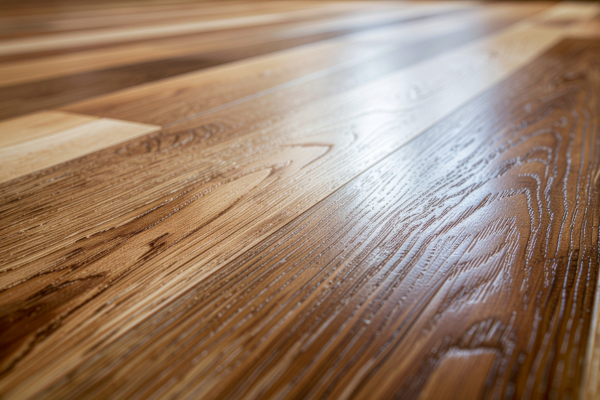
Engineered wood flooring uses a layered construction. Instead of one solid slab, manufacturers bond a real-wood wear layer on top of a core made from plywood or high-density fiberboard, with the grain of each layer running in alternating directions. Those cross-layers push against one another and resist movement, so the plank stays far more dimensionally stable than solid hardwood.
That stability matters enormously in a dry climate. Because engineered hardwood floors resist the pull of low humidity, they stay flatter and tighter through Colorado’s seasonal swings. Engineered hardwood is often the smarter choice for homeowners at altitude precisely because it fights the expansion and contraction that plagues standard wood.
The Durability Difference That Matters in a Colorado Home
Durability in a Colorado home isn’t only about hardness underfoot; it’s about how the floor behaves over years of humidity and temperature change. Engineered wood is less prone to warping and more resistant to moisture, which makes it a dependable choice for basements, radiant-heated rooms, and open living spaces where domestic solid hardwood might struggle.
That resilience translates directly into longevity. A floor that resists cupping and gapping keeps its beauty longer, holds up to heavy foot traffic, and protects your home’s resale value. For many Colorado homeowners, that durability difference is what makes their flooring decisions clear.
What Makes Italian-Made Engineered Hardwood Different From Domestic Brands
Not all engineered hardwood is built to the same standard. The layered concept is similar across the industry, but the quality of materials, the thickness of the wear layer, and the craftsmanship behind each plank separate premium Italian flooring from many mass-produced domestic products.
The Three-Layer Construction Behind Its Superior Durability
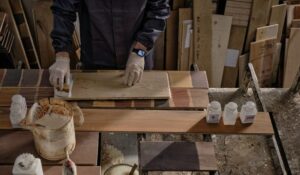
CP Parquet builds each plank with a three-layer construction engineered for exceptional stability. A dense, stable core anchors the plank, while the alternating layers lock the wood against movement. This precise engineering gives the flooring superior durability in exactly the conditions that defeat lesser wood products.
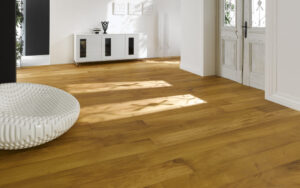
That structure also opens the door to a wide range of hardwood species, from classic oak and maple to hickory and rich walnut, without sacrificing the stability a mountain home demands. The result is beautiful floors that behave predictably, season after season.
Why a Thicker Wear Layer Means Beautiful Floors That Last Decades
The wear layer on top is the part you actually walk on, and its thickness determines how long a floor lasts. Many domestic brands use a thin veneer that can only be sanded and refinished once, if at all. CP Parquet uses an impressive 5 mm real-wood top layer, giving the floor far more material to withstand years of foot traffic.
That thicker layer means homeowners can refinish the surface multiple times over its life, restoring the aesthetics of solid wood without the instability. Combined with genuine Italian craftsmanship, it delivers the timeless look and longevity that luxury homes deserve.
Choosing the Best Flooring for Colorado Homes in Vail Valley
Choosing the right flooring for your Colorado home comes down to matching the product to the environment. In Vail Valley, that means prioritizing stability, moisture resistance, and a construction proven to handle low humidity and dry winters, rather than choosing on looks alone.
Matching Engineered Wood Flooring to Mountain-Home Living
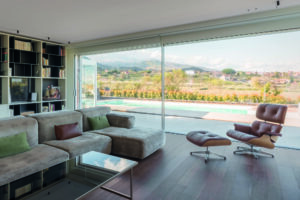
Mountain-home living brings snow, ski gear, and constant foot traffic through entryways and living spaces. Engineered wood flooring suits that lifestyle because it pairs the warmth of real wood with the resilience these rooms need. Homeowners can select a species and finish that fits their design, then trust the layered construction to hold up.
Warm wood underfoot also supports comfort and indoor air quality, helping a mountain home feel as inviting as it looks. Browsing the available wood species and formats is a practical way to see how different woods might suit a specific space.
Bringing Lasting Italian Wood Flooring Into Your Vail Valley Home
The best flooring for Colorado homes stands up to altitude, humidity fluctuation, and years of daily life without losing its character. Italian-made engineered hardwood earns its reputation in Vail Valley by combining dimensional stability, a thick real-wood wear layer, and craftsmanship built to last.
For homeowners weighing their flooring options, understanding how engineered hardwood outperforms solid hardwood in a dry mountain climate makes the decision far clearer. To see how genuine Italian wood flooring could work in your own space, explore CP Parquet’s luxury wood floors and consider ordering a sample to feel the quality firsthand.