How Italian Flooring Craftsmanship Differs From Mass-Produced Hardwood
Two floors can sit side by side in a showroom and look nearly identical. Give them ten years, and one reads as rich and settled while the other looks tired. The difference rarely shows in the sample. It lives in how the maker built each plank: the drying, the grading, the cutting, the finish. Here is how Italian craftsmanship builds wood flooring differently from mass production, and where the distinction appears underfoot.
What Mass Production Does to a Hardwood Floor
Mass production sets one goal: move volume through the line. Every step of manufacturing bends toward that goal, and the floor pays for the speed.
Speed, Volume, and the Shortcuts That Follow
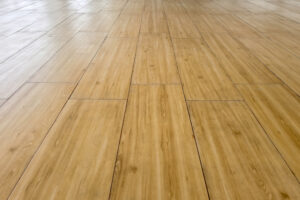
A factory line dries wood fast, because slow drying is costly. It cuts boards for yield rather than grain, because offcuts cost money. It relies on stain and finish to deliver a look, because consistent colour sells. None of this makes a floor bad. It makes a floor average by design. Laminate carried this logic to its end point, and much of the engineered hardwood North America imports follows it: a thin slice of real wood on top. The line chooses adhesives and finishes that prioritize speed of cure over purity of content, and emission rules in the country of origin vary widely.
Why Two Hardwood Flooring Boards Can Look Alike and Age Differently
Two boards that match in a showroom can diverge within a decade. Density and moisture content decide how wood behaves, and fast processing leaves moisture uneven. A board that carries hidden tension warps or cracks as humidity shifts. Grain orientation decides stability, and a board sawn across the grain moves more than one sawn along it. The surface of manufactured flooring may also be thinner than it appears, a stain over modest wood. Time reveals what the sample concealed, and that is the hidden cost of a floor built for price alone.
How Italian Craftsmanship Builds a Floor Differently
In workshops in Italy, the process runs on a different clock. The aim is not volume but the character of every plank.
Slow Drying and Careful Grading of the Wood
Italian artisans dry lumber slowly and grade it against rigorous quality standards, setting aside boards whose density or grain suggests future movement. The source matters as much as the method: premium oak from forests under sustainable management, with traceability from forest to floor and FSC-certified wood to ensure the claim holds. EU regulation reinforces the discipline, and sustainability begins with a supplier who plants a tree for every one harvested.
Cuts That Follow the Grain
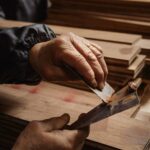
Craftsmanship cuts with the grain rather than through it. Skilled sawyers read each piece of wood and decide where the blade goes, so grain patterns run true and every plank behaves predictably. That precision is structural, not cosmetic. A three-layer floor of engineered wood works because the maker balances the layers of wood against each other, so the panel keeps its structural integrity and stays structurally sound where solid wood alone would move.
Finishes Applied in Layers and Often by Hand
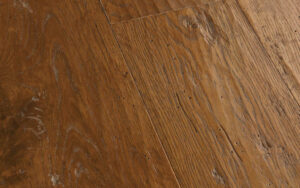
The finish stage separates the two traditions most clearly. Mass production sprays a fast coating; Italian workshops build a finish in layers, often by hand, using pure water-based natural finishes and non-toxic adhesives. The goal is to enhance the wood’s natural tone, not to disguise it, and to celebrate the small imperfection that makes a plank distinct. A hand-polished surface absorbs light differently than a sprayed one.
Where the Difference Shows Up Underfoot
Claims are easy. Performance underfoot is where craft proves itself.
Wear Layers and the Durability That Lasts Decades
Thickness decides lifespan. A premium engineered hardwood flooring product carries a wear layer of 5 mm of noble wood, thick enough to withstand decades of footsteps and to take sanding and refinishing when the surface tires. A thin decorative layer cannot, and no finish compensates. Stability matters just as much: a well-engineered Italian-made floor handles radiant heat, and installation over concrete slabs succeeds where solid hardwood would warp. With proper care, the floor exceeds its promised longevity and proves incredibly durable.
Color and Texture That No Machine Repeats
Machine-made floors aim for uniformity, and uniformity is a tell. In a crafted floor, colour varies from plank to plank, grain patterns shift, and the surface carries texture a machine would sand away. The rustic character of a European walnut sits beside the calm of oak, and nothing repeats. That natural beauty is the aesthetic point: a seamless field of wood that no catalogue replicates.
Why an Italian Floor Reads as Luxury Without Trying
Luxury in flooring is not gloss. It is restraint, proportion, and material honesty, and generations of handcraft in Italy have practiced all three.
Wide Planks, Parquet, and the Timeless Patterns of Italian Design
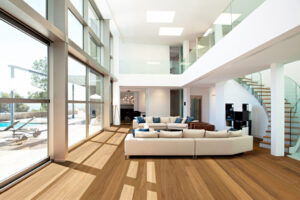
Italy shaped the vocabulary: grand wide plank formats that let grain run uninterrupted, and parquet patterns that turn pieces of wood into geometry. These are timeless choices, not trends, and they elevate a room by proportion rather than decoration. A reclaimed wood floor carries the same logic further, with history in every board, and exotic species extend the palette.
Elegance That Settles Into a Room Instead of Shouting
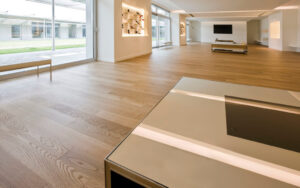
Elegance of this kind is quiet. The floor sets a tone and then recedes, letting light, furniture, and life take the foreground. High-quality surfaces do this instinctively, because the eye reads material honesty even when the mind cannot name it. That is the distinction homeowners respond to without knowing why.
A Floor That Ages Into Its Character
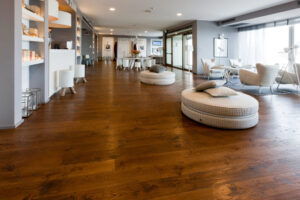
A mass-produced floor ages toward replacement. A crafted floor ages toward character, gathering patina and deepening in tone. The pricing gap between the two narrows over a lifespan, because you buy one floor twice and the other once. The choice for homeowners comes down to how a maker builds the floor at every step: dried, graded, cut, finished, and documented. Italian craftsmanship answers that question in the wood itself, and the floor answers it every day underfoot.